න Schedule
8:30 — 9:00am Doors are open, guests arrive
9:15 — 9:30am Opening (By Kat Vylomova) [slides]
9:30 — 11:00am Session 1
French (by Raphaël Merx) [slides]
Spanish (by Demian Inostroza) [slides]
Slovak (by Martin Tomko) [slides]
Russian (by Mariia Timofeeva) [slides]
11:00 — 11:30am Coffee/Tea Break
11:30 — 1:00pm Session 2
Pacific Languages (Keynote by Nick Thieberger) [slides]
Indonesian (by Muhammad Alif Wahab Adhicahya) [slides]
Japanese (by Usha Nattala) [slides]
1:00 — 1:45pm Linguistic Trivia (by Kat Vylomova)/Lunch [slides]
1:45 — 3:15pm Session 3
Telugu (by Usha Nattala) [slides]
Kurdish (by Aso Mahmudi) [slides]
Farsi (by Farnaz Pirasteh) [slides]
Urdu (by Syed Faraz Ahmed) [slides]
3:15 — 3:45pm Coffee/Tea Break
3:45 — 5:15pm Session 4
Anatolian Languages (by Chris Guest) [slides]
Hindi-Bengali-Sanskrit (by Trina Dey) [slides]
Mandarin (by Zihan Xu) [slides]
5:15 — 5:30pm Closing session (By Kat Vylomova)
5:30 — 6:00pm Networking/The End!
🌱 This event is supported by the FEIT Diversity and Inclusion Grant.
ლ Languages
We are happy to announce that the Festival will feature the following languages:
«Half the letters in a French sentence are often silent, but they aren't useless. They serve as a signalling mechanism for the educated class. Join me to discover why French spelling is so complex, how it shapes society, and how modern NLP tools (from spell-checkers to ChatGPT) are levelling the playing field. »
«Kurdish is spoken by tens of millions of people, yet it remains underrepresented in language technology. In this talk, I introduce Kurdish through a set of curious and sometimes unexpected linguistic features, from its rich dialect diversity to its various writing systems. I then turn to the current state of technology, asking why tools we take for granted in other languages often struggle with Kurdish. The talk is designed as a light, accessible tour that combines linguistic insight with a broader reflection on inclusion and bias in modern NLP. »
«I will teach you a key skill - how to ask for ice-cream in Slovak. And there will be a map, to show you where Slovakia is.»
«Come along to a fun session on the Russian language! We will look at what makes Russian unique and share some interesting facts, plus a few jokes along the way. No need to know any Russian, just bring your curiosity and a sense of humor!»
«I will present an overview of the Spanish language, covering its global reach as one of the world's most spoken languages with over 500 million speakers across multiple continents. The presentation will also explore distinctive linguistic features of Spanish, including aspects of its grammar, phonetics, and regional variations.»
«Join to explore Urdu—a language shaped by centuries of cultural fusion. Blending Arabic, Persian, Sanskrit, English, and more, Urdu is inherently multicultural, continually evolving through its remarkable ability to absorb and adapt new vocabulary. Spoken by over 200 million people and ranked as the 11th most spoken language in the world, Urdu offers far more than words. Its script is visually artistic, drawing from rich calligraphic traditions, while its spoken form carries a natural melody. A unique highlight of Urdu is its striking phonetic richness. Urdu incorporates a wide range of sounds—from soft to deep and retroflex consonants—giving speakers exceptional phonetic diversity. This broad sound palette equips Urdu speakers with an ear and tongue highly adaptable for learning and pronouncing other languages. Finally, thanks to its high mutual intelligibility with several related languages, an Urdu speaker can practically connect with around 10% of the world’s population.»
«With around 110 million speakers and ancient origins dating back to atleast 400 BC, Telugu is the 4th most spoken language in India and 14th most spoken language globally owing to the prevalence of Telugu-speaking software developers who have gone around the world (Satya Nadella, Microsoft; Arvind Krishna, IBM among others). Musical to the ear, surgically precise in phonetics and deeply expressive in nature, learn what makes this language unique and different from any other language in the world.»
«Discover the elegance and logic of Indonesian, a language that serves as the unifying voice for over 270 million people across 17,000 islands. This session offers a fascinating look at why Indonesian is celebrated as one of the world's most accessible languages, featuring its Latin-based script, gender-neutral pronouns, and intuitive grammar. We will explore its unique evolution into a modern national language, its clever use of "reduplication" for pluralization, and how it seamlessly blends a rich tapestry of global influences. Perfect for travelers, linguists, and anyone curious about Southeast Asian culture, this talk provides a compelling gateway into the heart of the Indonesian archipelago.»
«Nearly a quarter of the world's languages are spoken in the Pacific and PNG. This amazing spread of languages includes ancient lineages in PNG, more recent Polynesian and Melanesian languages, and even more recent Creole languages like Tok Pisin or Bislama. In this short talk I will outline the range of languages and their history. I will play examples of these languages and briefly talk about the kinds of grammatical features they display.»
«The Anatolian languages are an extinct family of languages originating from what is now Türkiye. Their place in the Indo-European language group, epigraphy and influence will be discussed.»
«Persian is one of the world’s oldest living languages, with a history of over 2,500 years, and it has been spoken across a wide region for centuries. Today, it connects people across cultures and countries, including Iran, Afghanistan, and Tajikistan, and is known for its rich poetry, warmth, and expressive everyday phrases. Join us for a fun and informative session with interactive activities; you’ll leave the session able to have simple conversations in Persian with not only your Iranian friends but also Afghans, or Tajiks!»
«Three Languages, One Origin: The Journey from Sanskrit: Hindi and Bengali trace their roots to Sanskrit, sharing deep linguistic and grammatical foundations. Yet over time, major shifts in grammar, regional evolution, and historical influences - especially Persian impact during the Mughal era - shaped them into distinct languages with unique identities. »
«How Nepali has evolved from past to present, especially under the influence of globalization and digital media. I will share its historical roots and how people can relate to the modern form of Nepali today. The presentation will finish with a small takeaway - sharing with the audience a simple, popular really short 'Nepali sentence' they can actually use to connect with Nepali speakers anywhere.»
«Ever wondered why a computer is called an "electric brain" or why cheering someone on means "add oil" in translation of Chinese? Join my relaxed and interactive presentation to Mandarin Chinese, where I will introduce dialect, explore characters, and uncover the quirky logic behind everyday words.»
«Deeply entwined with cultural tradition, historical context and the love of natural beauty, Japanese, a language as unique as the nation and its people, is spoken by 125 million over the world. With fewer consonants than other languages and soft-vowel endings, this melodious-sounding language lends itself perfectly to poetry and philosophy. Blending three different scripts in one sentence, even commonplace writing looks like a work of art. Today, modern pop culture has taken this language and its culture all around the world - it would be hard to find anyone who hasn't been touched in some way or the other by something originating from Japan. »
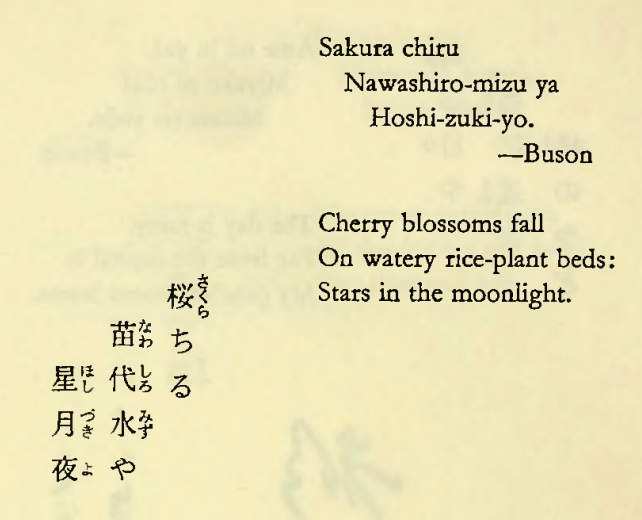
Taniguchi Buson (1716-1783)
taken from "One Hundred Famous HAIKU: Selected and Translated into English" by Daniel C. Buchanan, Japan Publications, Inc, 1973
න About

What is it all about? FEIT is not only the oldest engineering and information technology faculty in Australia but it also features a large community of over 3,000 students supported by around 400 faculty members, representing over 60 countries. Festival Of Languages provides an opportunity for faculty members (both students and staff) to meet colleagues and peers and celebrate this great diversity of languages and cultures within the faculty. We kindly invite community members to share their native languages with others (and discuss some fascinating aspects of their cultures!) by giving 10–15 minute presentations. As the event will be hosted within FEIT, we also encourage FEIT students and staff to discuss the state of technology (machine translation, web search, spell checking tools, ASR, etc.) available for their native languages.
What will be happening on the day of the event? Festival Of Languages is a day-long (9am to 5pm) event split into three sections, or parts: (i) language presentations; (ii) language technology presentations; (iii) language trivia games. We will run coffee-breaks between the parts for further networking. The schedule will be published in late January.
🌱 This event is supported by the FEIT Diversity and Inclusion Grant.
ლ Call For Proposals
We invite FEIT students and staff to deliver 10-15 minute presentations about their native languages and cultures. The presentation may include: general information about the language, the status of the language, the number of speakers, some fascinating facts or properties, the state of technology.
No need to be a linguist/scientist, the most important thing is your willingness to share your language!
In order to register/become a speaker, please submit the form by January, 20th.
If you have any questions, please contact Ekaterina Vylomova (the main organiser) via vylomovae@unimelb.edu.au
Frequently Asked Questions:
1) I am interested in languages. Can I attend without giving a presentation? Sure, please come! But do not forget to register!
2) I cannot be there for the whole day (9am--5pm), should I still register? Yes, please do, it's flexible and you can stay there for as long as you like!
3) The registration form asks to briefly describe my presentation, can I add/edit it later? Absolutely! You will be able to adjust it after the registration (till Feb 9th)
4) I would like to present a language which is not my mother tongue, is this possible? Yes, we are open to this option as well, as soon as you are passionate about it!
5) What should I talk about in the presentation? Typically, presentations would start with a brief overview of each language (where it is spoken; how many speakers; how it is related to other languages of the area). After that presenters often discuss some interesting characteristics of the language (words, syntactic structures, idioms). Here is an example of the language session structure: https://en.wikipedia.org/wiki/Adelaide_Language_Festival .
হ Register!
In order to register for the Festival Of Languages, you just need to fill out a short form. The same form can be used to register as a speaker and as an attendee. The festival is supported by FEIT Diversity & Inclusion program and is *free* (i.e. you do not pay for registration)!